 Send Inquiry
 Send SMS
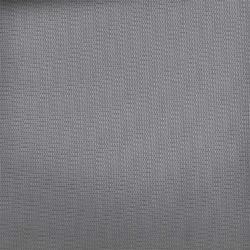
Fine Wire Mesh
50.00 - 60.00 INR
Product Details:
- Feature Fine mesh, Durable, Flexible
- Corrosion Resistant Yes
- Finish Smooth
- Grade SS304, SS316
- Hardness Soft, Semi-hard, Hard
- Capacity Custom as per requirement
- Standard ASTM, DIN
- Click to View more
X
Fine Wire Mesh Price And Quantity
- 20 Sqr Feet Square Foot
- 50.00 - 60.00 INR
Fine Wire Mesh Product Specifications
- Varies by gauge
- 650 MPa 900 MPa
- ASTM, DIN
- Polished, Galvanized
- 0.02 mm to 2.5 mm
- 0.025 mm to 2 mm
- Square, Rectangular
- Soft, Semi-hard, Hard
- Custom as per requirement
- Yes
- 0.05 mm
- SS304, SS316
- Smooth
- Filtration, Sieving, Industrial, Laboratory
- Fine mesh, Durable, Flexible
- Stainless Steel
- 0.025 mm to 2.36 mm
- Silver
- 10 Mesh to 400 Mesh
- Plain edge, Selvedge edge
- 0.5 m to 2 m
- Upto 800C
- Plain or Twill Weave
- Rolls or sheets
- 15 m, 30 m or customized
Fine Wire Mesh Trade Information
- Cash Against Delivery (CAD)
- 100 Square Foot Per Day
- Asia, Australia, North America, South America, Eastern Europe, Middle East, Central America, Western Europe, Africa
- All India
Product Description
We are engaged in offering our clients with a qualitative range of Fine Wire Mesh. These are dependent on the configuration of wire thickness in relation to aperture size, as well as the type of weaves. It can also vary in texture from being as fine, soft and flexible as silk to being as rigid as steel plate. We offer this Fine Wire Mesh in rolls or in cut circles and also as fabricated filters. These are manufactured using different metals.
Premium Stainless Steel Construction
This fine wire mesh is manufactured using top-quality SS304 and SS316 grades, ensuring excellent corrosion resistance, high tensile strength, and longevity. The material withstands tough environments and rigorous applications, making it ideal for industries requiring robust and reliable mesh solutions.
Versatile Mesh Specifications
Ranging from 10 to 400 mesh sizes with opening sizes between 0.025 mm and 2.36 mm, the wire mesh offers precise filtration and sieving capabilities. You can choose from widths (0.52 m), lengths (15 m, 30 m, or custom), and thicknesses (0.022.5 mm), fitting a wide array of industrial, laboratory, and commercial requirements.
Customizable Shapes and Packing
Shapes include square and rectangular formats with choices of plain or selvedge edge types. Packing is available in rolls or sheets for easy handling and storage. Custom dimensions, grades, and capacities can be tailored to specific project needs, ensuring optimal performance for any application.
FAQs of Fine Wire Mesh:
Q: How is fine wire mesh typically used in industrial and laboratory applications?
A: Fine wire mesh is commonly used for filtration, sieving, and separation in industrial processes and laboratory experiments. Its customizable mesh size and opening allow precise control over particle retention, making it suitable for chemical, food, pharmaceutical, and research environments.Q: What material grades are available and what benefits do SS304 and SS316 offer?
A: The mesh is made from stainless steel grades SS304 and SS316. SS304 provides good chemical resistance and durability, whereas SS316 offers enhanced corrosion resistance, particularly in marine or acidic environments, making it ideal for demanding applications.Q: When should I choose plain weave versus twill weave for my application?
A: Plain weave is preferred for general applications requiring stability and uniformity in filtering or sieving. Twill weave provides added flexibility and strength, suitable for situations where higher load or finer filtration is needed, such as in advanced laboratory settings.Q: Where can this wire mesh be supplied and in what packing options?
A: This fine wire mesh is distributed, exported, imported, manufactured, supplied, and traded across India. It is available in rolls or sheets, allowing easy transport and integration into various industrial setups or laboratory installations.Q: What is the process for customizing mesh size, length, or width as per project requirements?
A: Custom orders are accepted for mesh size, opening, length, width, and thickness. Clients specify their exact requirements, and the manufacturer produces the mesh according to ASTM or DIN standards, ensuring accuracy and prompt delivery.Q: How does the temperature resistance of up to 800C benefit users?
A: With a temperature resistance of up to 800C, this wire mesh is suitable for high-temperature processes such as kiln operations, heat treatment, and industrial filtering, ensuring reliable performance and minimal degradation even under intense heat.Q: What advantages does the polished or galvanized surface treatment provide?
A: Polished or galvanized surface treatments improve the meshs resistance to corrosion, enhance appearance, and reduce particle buildup during filtration or sieving, resulting in easier cleaning and longer service life.Tell us about your requirement

Price:
Quantity
Select Unit
- 50
- 100
- 200
- 250
- 500
- 1000+
Additional detail
Mobile number
Email

Other Products in 'Fasteners' category


Contact Details

- 67/69, Mohamedali Road, Dada Manzil Building 2nd Floor, Masjid Bunder (West),Mumbai - 400003, Maharashtra, India
- Phone :08045476068
GST : 27AABPV0855D1ZS

- Mr Bhavin Bhupatbhai Vora (Proprietor)
- Mobile :08045476068
- Mr. Milin Vora
- Mobile :08045476068
- Send Inquiry
 Send Inquiry
|


 |
ARIHANT TRADING CO.
All Rights Reserved.(Terms of Use) Developed and Managed by Infocom Network Private Limited. |
