 Send Inquiry
 Send SMS
 Call Me Free
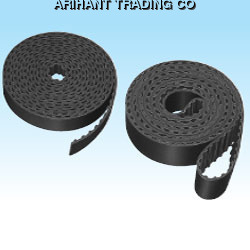
Rubber Timing Belts
500.00 - 2000.00 INR
Product Details:
- Usage Transmission
- Material Rubber
- Type Belt Conveyor
- Structure Belt
- Belt Conveyor Troughed Belt
- Roller Conveyor Live Powered
- Color Black
- Click to View more
X
Rubber Timing Belts Price And Quantity
- 10 Piece
- 500.00 - 2000.00 INR
Rubber Timing Belts Product Specifications
- Transmission
- Belt
- Rubber
- Belt Conveyor
- Troughed Belt
- Black
- Live Powered
- 100-200 Meter (m)
Rubber Timing Belts Trade Information
- 1000 Piece Per Week
- 10-15 Days
- Australia, North America, South America, Eastern Europe, Western Europe, Middle East, Africa, Asia, Central America
- All India
Product Description
Our organization is well established in the global market as a manufacturer, supplier and exporter of Rubber Timing Belts. These belts are made using fine quality rubber and advanced production methods at our large manufacturing unit. Our product line is commonly used in varied industries such as automobile, spare parts, textiles and many more. To meet the specific needs of different industry segments, Rubber Timing Belts are offered in a variety of sizes, diameters and number of teeth.
Attributes:-
High tensile strength
-
Resistance to corrosion
-
Dimensional accuracy
-
Long service life
Other details:
Features:
-
Freer design possible as the length can be extended.
Types for Open-End:
-
Trapezoidal Tooth: (MXL, HL, L, H)
-
Round Tooth: S2M, S3M, S5M, S8M, S14M
Types for Endless: L, H, XH,XXH, S8M, S14M
Thermo setting Polyurethane Timing Belts
Size Range for Open-End Type
-
Trapezoidal Tooth: T80, XL, L
-
Trapezoidal Tooth: T5, T10
-
Round Tooth: S2M, S3M
High Durability and Transmission Performance
Crafted with superior rubber, our timing belts are tailored for robust performance in live powered conveyor systems. Their troughed design enhances material containment, minimizing spillage, and supporting steady conveying even in challenging environments. Each belt upholds consistent quality, ensuring long-lasting service and reduced maintenance demands.
Versatile Sizing for Industrial Requirements
Available in lengths from 100 to 200 meters, these belts accommodate various industrial conveyor layouts. Whether you need a single extended belt or multiple segments, our products are flexibly designed for customization. Their adaptability ensures seamless integration with existing equipment across multiple industries.
FAQ's of Rubber Timing Belts:
Q: How are rubber timing belts with 100-200 meter lengths installed in conveyor systems?
A: Rubber timing belts of this length are typically installed by aligning the belt on the troughed belt conveyor structure, tensioning it appropriately, and synchronizing it with the system's pulleys and rollers. Installation should be performed by skilled technicians to ensure smooth power transmission and prevent belt misalignment.Q: What advantages does a live powered roller conveyor with a rubber timing belt offer?
A: Live powered roller conveyors using rubber timing belts ensure consistent and controlled movement of goods. The timing belt allows for precise synchronization between rollers, minimizing slippage and optimizing throughput while reducing wear and tear compared to traditional drive methods.Q: When should a rubber timing belt be replaced in a transmission conveyor system?
A: A rubber timing belt should be replaced when signs of wear, such as cracking, loss of tension, or visible fraying, are present. Regular maintenance checks are recommended, and replacement cycles may vary depending on conveyor usage, load weight, and operational environment.Q: Where can these rubber timing belts be used effectively?
A: These belts are ideal for use in industrial roller conveyors, material handling lines, and automated manufacturing setups where reliable and continuous transmission is required. Their robust design makes them suitable for warehouses, production plants, and logistics hubs.Q: What is the manufacturing process for these rubber timing belts?
A: The belts are manufactured by blending high-grade rubber compounds, shaping them into the required dimensions, and molding them into a troughed structure. Reinforcement materials are integrated for added strength, followed by curing and quality testing to ensure durability and performance.Q: How does the belt's material and structure benefit transmission applications?
A: The use of rubber and a troughed belt structure provides flexibility, shock absorption, and enhanced grip, which improves the precision of power transmission. This design reduces the risk of slippage and allows for efficient movement of goods on both inclines and straights.Tell us about your requirement

Price:
Quantity
Select Unit
- 50
- 100
- 200
- 250
- 500
- 1000+
Additional detail
Mobile number
Email

Other Products in 'Timing Belt' category


Contact Details

- 67/69, Mohamedali Road, Dada Manzil Building 2nd Floor, Masjid Bunder (West),Mumbai - 400003, Maharashtra, India
- Phone :08045476068
GST : 27AABPV0855D1ZS

- Mr Bhavin Bhupatbhai Vora (Proprietor)
- Mobile :08045476068
- Mr. Milin Vora
- Mobile :08045476068
- Send Inquiry
 Send Inquiry
|


 |
ARIHANT TRADING CO.
All Rights Reserved.(Terms of Use) Developed and Managed by Infocom Network Private Limited. |
