 Send Inquiry
 Send SMS
 Call Me Free
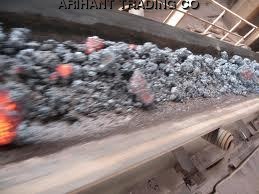
Heat Resistant Conveyor Belt
500.00 - 2000.00 INR
Product Details:
- Usage Transmissiomn
- Material Rubber
- Type Belt Conveyor
- Structure Belt
- Belt Conveyor Flat Belt
- Roller Conveyor Live Powered
- Color Brown
- Click to View more
X
Heat Resistant Conveyor Belt Price And Quantity
- 500.00 - 2000.00 INR
- 10 Piece
Heat Resistant Conveyor Belt Product Specifications
- Belt
- Live Powered
- Brown
- Transmissiomn
- Belt Conveyor
- 100-200 Meter (m)
- Rubber
- Flat Belt
Heat Resistant Conveyor Belt Trade Information
- 1000 Piece Per Week
- 10-15 Days
- Australia, South America, Western Europe, Middle East, Africa, Asia, Central America, Eastern Europe, North America
- All India
Product Description
With the support of experience gained over the years in the domain; we have committed ourselves in manufacturing, supplying and exporting finest superior grade Heat Resistant Conveyor Belt. Manufactured using high grade material, these belts are widely used for conveying hot materials in various industries. Our dedicated workforce deliberately works hard to constantly improve the quality of the offered product-line. This Heat Resistant Conveyor Belt is checked by quality controllers to ensure defect free delivery.
Other info:
Heat Resistant Conveyor Belt.
Construction:
Special high temperature resistant canvas (with high modulus, low shrink and high breaking tensile strength) or
Steel Cord
Special rubber layer with good adhesion properties (skimmed layer)
Cover rubber- EPDM rubber or Chloro-butyl rubber
| Advantage: Excellent in heat resistance, HR120, HR150, HR180 & HR200 Avoid premature aging Good adhesion properties Low shrink Longer using life
|
Suitable for conveying hot materials
Cement Works
Iron and Steel Industry, Metal Foundries, Metal Processing Industry
Heating Stations, Power Stations, Garbage Incineration Plants
Lime kilns
Glass Works
Slat Works, etc
For Your Reference Selection
| Item | Conveyed Material Temperature | Belt Surface Temperature | Usage |
| T1 | Bulk material 70oC-200oC, | 50oC-120oC | Coke, sinter, and low- temperature heat resistant |
| T2 | 100oC-400oC | 120oC-200oC | Steel and casting, sinter |
| T3 | 100oC-400oC | 120oC-200oC | Cement clinker, residues, dry powder |
| HOR | 70oC-120oC | 50oC-120oC | Asphalt and other oil-bearing materials |
Exceptional Heat Resistance
Specially constructed from high-grade rubber, this belt maintains performance and integrity even under high temperature conditions. Whether in foundries, cement plants, or power stations, the belt resists deformation and premature wear, maximizing operational efficiency and reducing replacement frequency.
Reliable Transmission and Versatile Usage
The flat belt structure ensures smooth and consistent transmission, enabling dependable movement of goods across long distances. Designed for compatibility with live powered roller conveyors, it is suitable for a variety of industrial uses, delivering flexibility and heavy-duty support.
FAQ's of Heat Resistant Conveyor Belt:
Q: How does the heat resistant conveyor belt function in high-temperature environments?
A: The belt is manufactured using specialized heat-resistant rubber compounds, allowing it to maintain its form and strength at elevated temperatures. This ensures uninterrupted material transport even in operations like metallurgy, cement, and ceramics.Q: What industries commonly utilize this heat resistant conveyor belt?
A: Industries such as manufacturing, mining, cement, steel, and power generation commonly use this conveyor belt, as it withstands heat and aggressive working conditions while reliably moving bulk or packaged materials.Q: When should I consider replacing a heat resistant conveyor belt?
A: Replacement is recommended when there are visible signs of significant wear, cracking, or loss of flexibility, or if the belt no longer maintains its heat-resistant properties in daily operation.Q: Where can I source this conveyor belt in India?
A: You can source this heat resistant conveyor belt directly from us, as we serve as an exporter, importer, manufacturer, supplier, and trader based in India, equipped to meet various industrial requirements.Q: What is the process for installing a flat type heat resistant belt on a live powered roller conveyor?
A: Installation involves measuring and cutting the belt to match the conveyor length, securely joining the belt ends, and aligning them on live powered rollers to ensure smooth and consistent operation across the entire run.Q: How does the structure and material of this belt benefit industrial usage?
A: The flat, rubber construction delivers enhanced durability, flexibility, and heat resistance, reducing downtime due to belt failures and facilitating efficient, continuous transmission in demanding industrial environments.Tell us about your requirement

Price:
Quantity
Select Unit
- 50
- 100
- 200
- 250
- 500
- 1000+
Additional detail
Mobile number
Email

Other Products in 'Conveyor Belt ' category



Contact Details

- 67/69, Mohamedali Road, Dada Manzil Building 2nd Floor, Masjid Bunder (West),Mumbai - 400003, Maharashtra, India
- Phone :08045476068
GST : 27AABPV0855D1ZS

- Mr Bhavin Bhupatbhai Vora (Proprietor)
- Mobile :08045476068
- Mr. Milin Vora
- Mobile :08045476068
- Send Inquiry
 Send Inquiry
|


 |
ARIHANT TRADING CO.
All Rights Reserved.(Terms of Use) Developed and Managed by Infocom Network Private Limited. |
